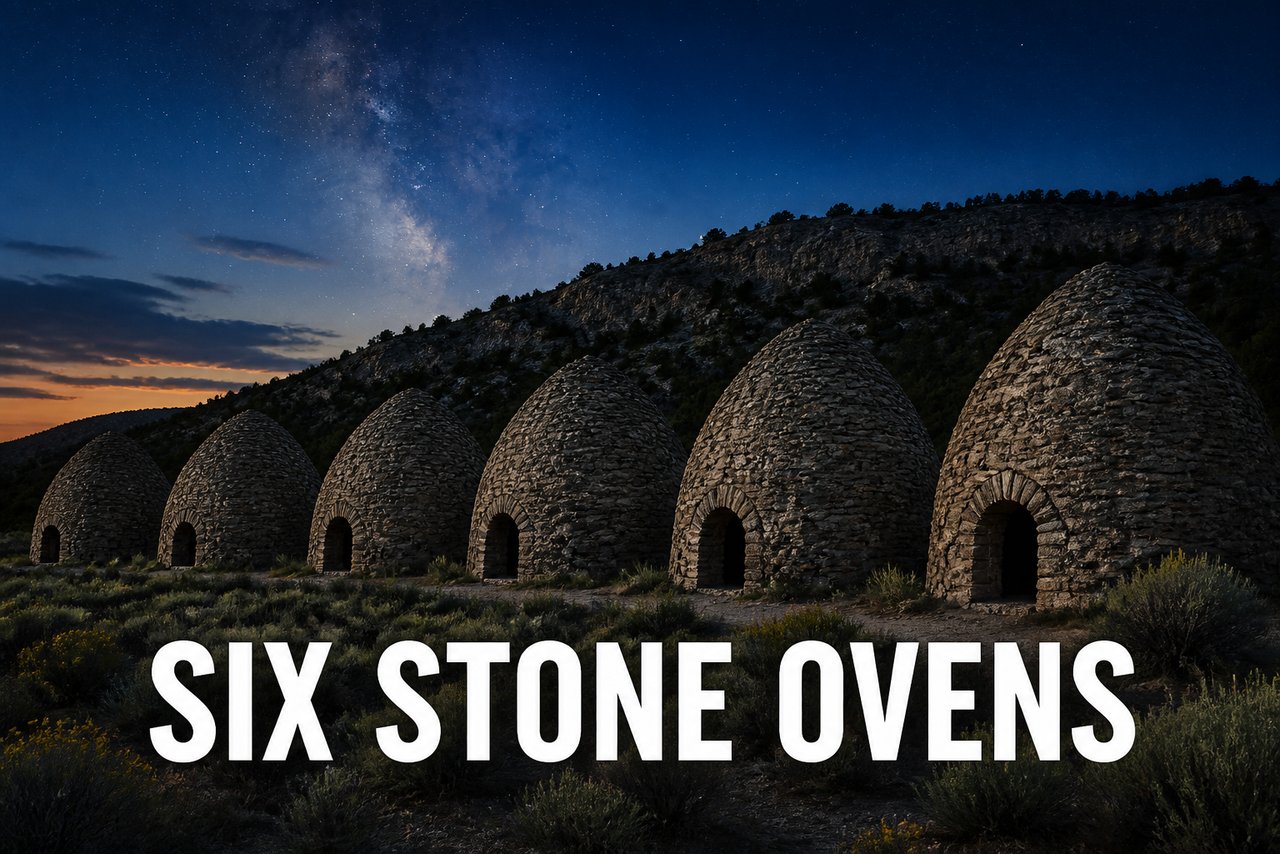
Ward Charcoal Ovens: Six Stone Beehives in the Egan Foothills
Twenty miles south of Ely, down a valley where the Egan Mountains fold into pinyon and juniper, six stone beehives the size of small garages stand in a row in the sagebrush. They are the best-preserved charcoal kilns in Nevada, and they are one of our favorite kind of state parks: the kind where one strange, beautiful piece of industrial history gets preserved in the middle of nowhere, exactly where it stood.
Silver Needs Charcoal
The ovens were built in the 1870s to feed the smelters of the Ward Mining District, a silver boom in the hills above the valley. Smelting silver is hungry work, and the furnaces wanted charcoal - not wood, charcoal, which burns hotter and cleaner. So the miners did what mining districts all over the West did: they cut the local pinyon and juniper and cooked it slow. Each of these stone ovens could be packed with cords of green wood and burned down over days to a load of charcoal, tended around the clock by a charcoal burner who watched the color of the smoke the way a sailor watches the sky.
Six ovens, working for about three years in the late 1870s, helped consume a remarkable amount of the local woodland. That is the part that sticks with us walking the site: the landscape itself is part of the story. The groves around the park are back now, but they are second-growth - the originals went into the silver bars of the Ward mines.
Three Busy Years, One Hundred Fifty Years of Standing
Like most silver camps, Ward boomed and busted fast - the ovens were idle within a few years of their construction, when the district's richest ores gave out and the smelting moved on. And then the ovens did what thick stone walls do: they stood there. Through the 1880s and '90s they found afterlife after afterlife in the story books - shelter for freighters caught in the snow, and, the stories go, the occasional hideout for stagecoach road agents. A second mining era at the beginning of the twentieth century briefly revived the district, but the ovens themselves never worked charcoal again.
Nevada preserved the site as a state park in the 1950s, and today the six ovens are in remarkable shape - you can walk right up, and in one of them, right in. Standing inside, looking up through the dark stone throat at the little circle of sky, you get a feel for the job no museum display can give you. It is cool inside even on hot days, and the acoustics alone are worth the stop.
The Stop Itself
The park is an easy half-day from Ely - paved most of the way, then a short well-graded dirt road in (fine for any rig in dry weather; take it slow after rain). There are picnic tables among the ovens, a group area, and restrooms, and the valley setting is lovely, especially late in the day when the stone glows. Photographers know this place: the ovens with the Milky Way behind them is a bucket-list Nevada shot, and the park is far enough from town light to allow it.
For us it was a perfect in-between stop - close enough to Ely for groceries and the railroad, far enough out that the evening belonged to the birds and the wind. Walk all six ovens, read the markers, and think about the charcoal burners: alone out here with six stone bellies of slow fire, watching the smoke for the moment the wood became something worth its weight in silver.