Panguitch and the Quilt Walk: The Town Saved by Seven Men and a Stack of Quilts
Some towns you remember for a landmark. Panguitch you remember for a quilt.
We came in from the south on US-89, climbing out of the red rock country toward the high plateaus of southern Utah, and pulled into one of the most interesting little towns we have camped near: broad brick storefronts, steep-gabled roofs built for snow, and a history so unusual the town literally celebrates it with a festival every June.
A Hard Place to Farm
Panguitch sits high - right around 6,600 feet - in a valley between the Paunsaugunt and Markagunt plateaus, the red rock country of Bryce Canyon on one side and mountain meadows on the other. Mormon settlers founded the town in 1864, and the land looked promising: grass, timber, water. But the growing season at that elevation is short and the summers are cool, and the first crops struggled. The settlers had planted, and the frost had other plans.
By the winter of 1876 the town was starving. The stored grain was nearly gone, and the nearest settlement with flour to spare - Parowan - lay forty-some miles to the west, over the Markagunt Plateau. So seven men hitched up a wagon and went for flour.
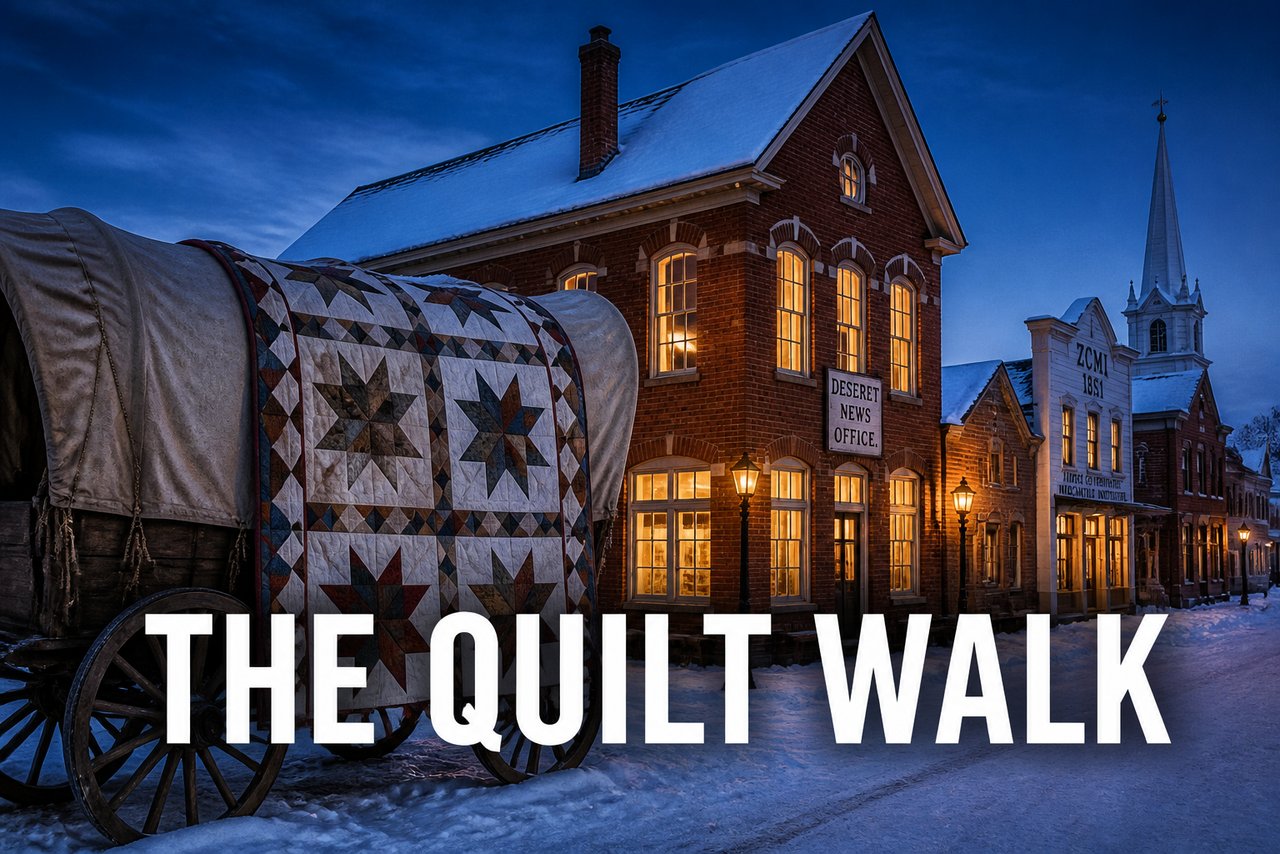
The Quilt Walk
What happened next is the story Panguitch has told for almost 150 years. High on the plateau the men hit snow so deep and so soft that neither man nor wagon could cross it - postholing through drifts with a heavy wagon was impossible, and the cold was lethal. The story goes that they spread quilts from home across the snow, lay down on them so they would not sink, and walked the drifts quilt by quilt: spread the next quilt, walk to it, pick up the last one, repeat. Miles of it. Over the mountains to Parowan and back, hauling the flour home through the same snowfield the same way.
It is one of those pioneer stories that sounds like a legend until you think it through - and then it starts sounding like simple physics and stubborn courage. Quilts distributed the weight; the men knew the snow would not hold a man walking, but it would hold a man lying flat. The flour came home. The town survived. And the quilts went back on the beds.
Today the town honors that rescue with the Panguitch Quilt Walk Festival every June - quilting shows, races, and story-telling - and you will find quilts worked into the town's public art everywhere you look. There is even a mural of the seven men walking on snow.
Brick by Brick
Panguitch's second act is written in brick. The downtown that stands today is largely a product of the early 1900s, when the town rebuilt itself after fire and prosperity in locally made red brick - the same clay-rich soil that frustrated the first farmers turned out fine building material. The result is one of the most photogenic main streets in Utah: the Bisbee building, the old opera house block, and the tall brick water tower that anchors the historic district. Much of downtown is on the National Register of Historic Places.
Walk it in the evening, when the bricks glow warm and the traffic thins out, and you can read the town's whole history in the storefronts: the general store, the saloon-turned-museum, the cafes where the local cowboys and the Bryce-bound tourists end up sitting side by side.
Gateway to the Hoodoos
The third reason we love Panguitch is location. The town sits at the junction of US-89 and Scenic Byway 12 - and Byway 12 is arguably the most beautiful drive in Utah, running east from Panguitch across the top of the Paunsaugunt Plateau, through Red Canyon's tunnel of hoodoos and pines, and on toward Bryce Canyon, Capitol Reef, and Grand Staircase-Escalante. Bryce Canyon National Park's amphitheater is about a half hour from downtown Panguitch - close enough for a sunrise run with the fifth wheel left safely in camp.
Go the other direction from town and you climb to Panguitch Lake, a big mountain lake famous for its fishing - the lake holds a strain of cutthroat trout, and the Forest Service campgrounds around it make a cooler-summer base camp. In between lie meadows, lava flows, and the Cascade Falls trail, where the water that falls actually feeds the Virgin River far below.
Why We Stopped Longer Than Planned
We rolled in expecting a fuel stop between parks and stayed to walk the brick streets, hear the quilt story from the locals, and plan our Bryce sunrise around the campfire. That is the thing about the little high-country towns: they pull you in with one story and hold you with three more.
If your route takes you down US-89, take the exit. Walk the historic district. Find the mural of the seven men and the quilts. And when you are standing in the July heat, remember that under a hundred and fifty winters' worth of snow, this town's whole survival once came down to a stack of quilts and seven stubborn men who refused to stop.