Steam to Diesel, and the Buffalo That Came Back: The Museum of the Northern Great Plains
Museum Three of Three
The third stop on that fifteen-dollar, two-day, three-museum pass - we keep repeating the math because it keeps being absurd - was the biggest and the broadest of them all: the Museum of the Northern Great Plains and its grounds, including Homestead Village and the Hornaday Buffalo Gallery. The first museum told the story of the river. The second was the fort that started the town. This one is the story of everything that came after: the land itself, and the people who farmed it. If the first two museums explain why Fort Benton exists, this one explains why Montana eats.
And fair warning: this post runs long, because the museum does. It's a complete museum - one of the most entertaining we've walked through in all our travels.
The Buffalo, in Bronze
Start with the buffalo, because the buffalo comes first. In the museum's gallery stands a display of bison rendered in bronze - a full group of them, and the story behind it is one of the great tales in American conservation. In 1886, a Smithsonian taxidermist named William Temple Hornaday, alarmed that the American bison was about to vanish entirely, came out to Montana to collect specimens of the last wild herd. The six-buffalo group he built from that expedition went on display at the Smithsonian in 1887 and stood there for nearly seventy years - and it is not an exaggeration to say that seeing the death of the species laid out in a museum case helped wake the country up. Hornaday went on to become one of the founding voices of American wildlife conservation.
The bronze group at Fort Benton pays homage to that display - the herd rendered permanent, in metal, on the plains where the story happened. Standing in front of it, you don't need a single interpretive label. You know what you're looking at: the national mammal, rescued at the last possible moment, staring back at you.
From Steam to Diesel
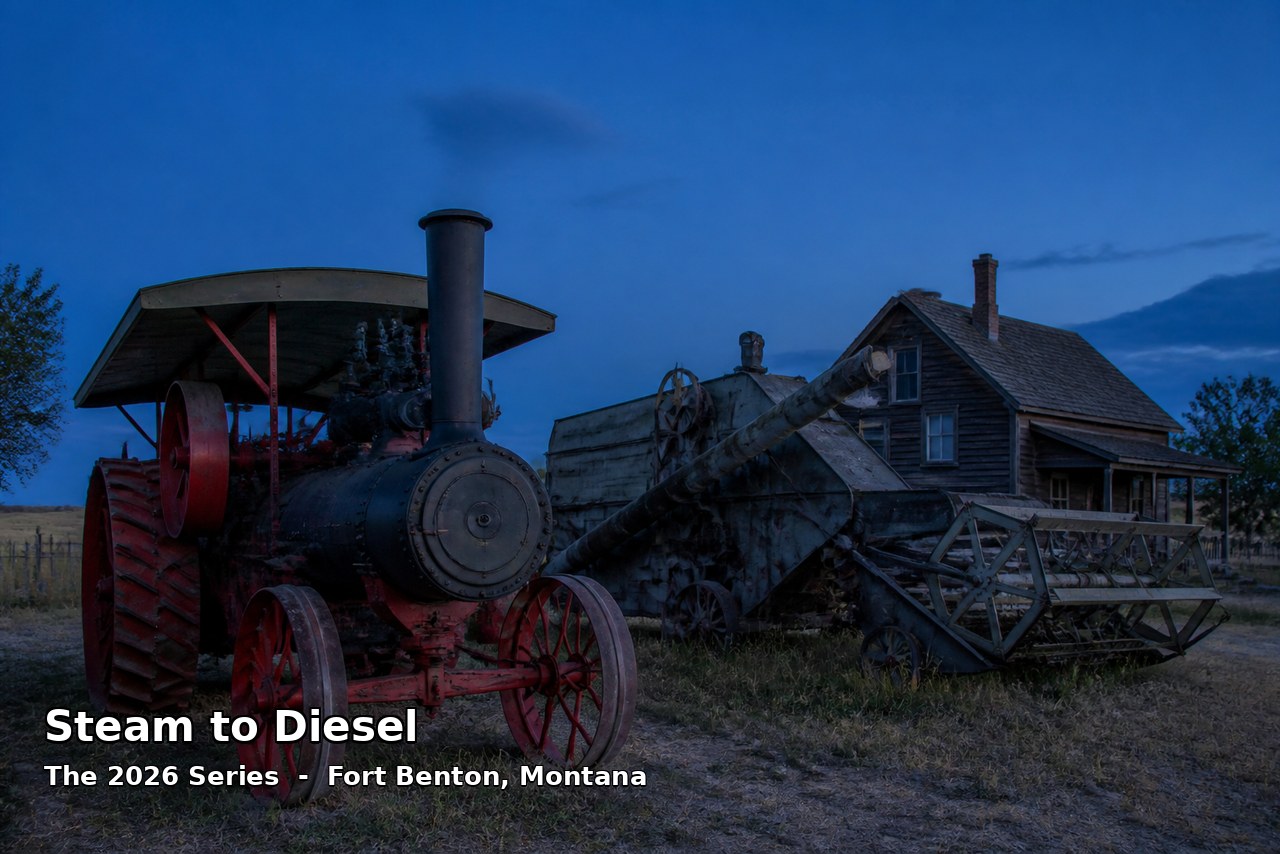
Then the museum opens up into the farming story, and here's the thing about that story: it's told in machines. The galleries walk you through every stage of field equipment the plains ever knew - harvesting implements evolving decade by decade, and the tractor line running from steam monsters, all boiler and iron, through the early gas rigs, right up to modern diesel workhorses with cabs and computers. You can stand in front of two machines separated by a hundred years of invention and see the whole arc of American agriculture in one look.
One exhibit stopped us cold, and we didn't expect it to: the story of the wheat. Dryland farming - growing a crop on the plains with no irrigation, on rain and stubbornness - was a puzzle for decades, and the museum tells the story of developing a new variety of wheat that finally thrived in it. It reads like a thriller if you let it: plant breeders crossing lines, the dust and drought years threatening to end the whole experiment, and a seed that could finally hold the ground between the rain. Every loaf of bread in every grocery store on the northern plains is a descendant of that work.
The Household and the Harness
The museum is full of the smaller stuff too, and the smaller stuff might be the best stuff. Washing machines and refrigerators from the first decades of rural electrification - the appliances that changed homestead life as surely as any tractor. Cases of hand tools, varieties upon varieties, each one solving some specific problem some farmer once had. Old saddlery, tooled and worn smooth. And yokes - different types, for oxen and draft animals, the harness technology that moved the plains before engines did.
And yes: old automobiles, going clear back to a Model T. The transition from horse to horsepower happened inside a single generation out here, and the museum has the vehicles to prove it.
Homestead Village
Outside, the museum builds its own town: Homestead Village, assembled from real buildings collected from the surrounding countryside - homestead-era structures that would have rotted into the fields if someone hadn't hauled them here.
There's a barn filled with horse-drawn sleighs and carriages - and a hearse, black and imposing, a reminder that this technology served every part of life. And a surrey with the fringe on top, which made us both start humming Oklahoma right there in the barn. There's a sheepherder's wagon, the mobile home of the range. And then the little town itself: a one-room schoolhouse, a bank, a general store, a post office, and a few log cabins, arranged so you can walk in the doors and imagine the morning routine of 1910.
Stand in the middle of the village street and the whole museum clicks into place. The machines, the wheat, the tools, the wagons - they all lived in these buildings. Homestead Village is the context the exhibits were missing, and vice versa.
If You Go
The Museum of the Northern Great Plains sits in Fort Benton about 40 minutes northeast of Great Falls, and it's the third museum on the town's combined $15 ticket (good for two days, and you'll want both). The main museum and galleries will take a couple of hours; Homestead Village deserves another hour, more if the tractor section hooks you like it hooked us. Summer hours are typically 9 to 5 - check ahead for the shoulder season.
For RVers and road-trippers: know that Fort Benton makes a long day trip from Great Falls but not an overnight one unless you've got lodging or a site secured - we drove up in the morning, spent the whole day, and drove back to our fifth wheel in Great Falls that evening. It works. But budget the full day. Half days are how you miss museums like these.
Last Light
We came out of the gates at the end of a very full day - river walk at dawn, two centuries of history after that - and drove back toward Great Falls with the evening light on the wheat fields. It had been the right order: the river, the fort, the story in glass, and finally the land itself, in machines and buildings and bronze buffalo. One more Fort Benton stop still made it into our day before we pointed the truck home - and it gets its own telling next. But the pass was done, and we'd spent fifteen dollars about as well as fifteen dollars can be spent.