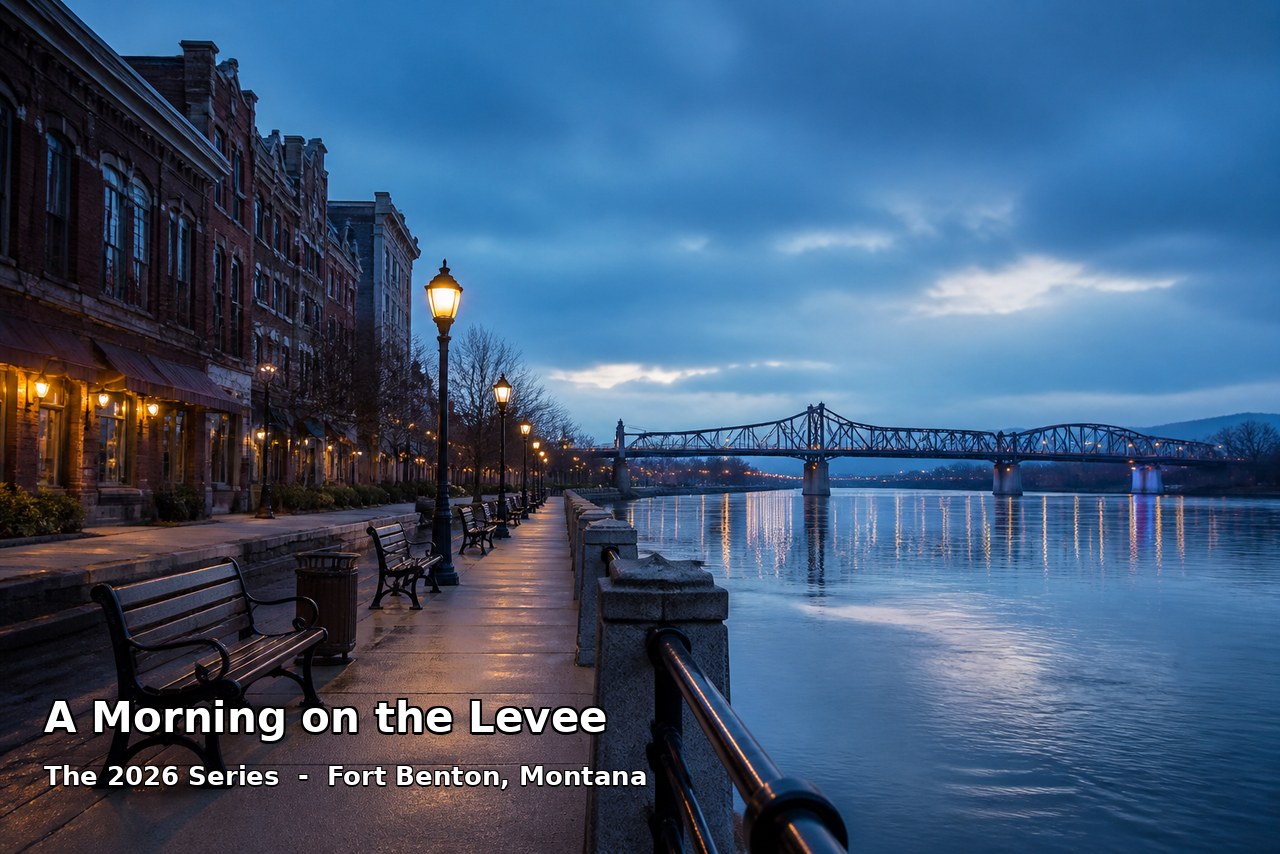
A Morning on the Levee: Fort Benton, Montana
The Town at the End of the Water
There is a spot on the Missouri River, roughly three thousand river miles from the Gulf of Mexico, where steamboats simply stopped. Not because the captains lost their nerve, but because the river itself quits. Above this point, the Missouri is a wild, shallow, rock-strewn stream out of the mountains; below it, for most of the steamboat era, it was a highway. The town that grew up at that line was called Fort Benton, and for a few frenzied decades it was one of the most important places in the American West - the World's Innermost Port, the Birthplace of Montana, a levee so lawless that its most famous block was known as the bloodiest in the West.
Today Fort Benton is a quiet farm town of about 1,500 people, and we pulled into it on a beautiful mid-August morning with a full day of museums planned - but with the museums not yet open. What we did instead turned out to be the best possible introduction to the place: we walked the river. This is that morning.
First Light on the Missouri
We started our exploration at one spot along the river, then fell into the river walk that trails through town along the water. If you've followed this trip log, you know we've seen the Missouri in a lot of moods by now - the roar at Great Falls, the white bluffs of the breaks downstream. But we'd never seen it like this: early morning, dew still heavy on the grass, the sun at a low angle throwing gold across the water, and not another soul on the walkway. The river made a low rustling sound against the bank. Birds were doing the morning's business in the cottonwoods.
Here's the thing about walking the Fort Benton levee at that hour: the town's entire history is arranged along your left shoulder like a museum you haven't entered yet. The Grand Union Hotel, built in 1882 and called the Waldorf of the West when it was the finest hotel between St. Louis and Seattle, stands right on the riverbank. Down the levee are the steamboat-era buildings of the historic district - a National Historic Landmark district, one of the small handful in all of Montana. Interpretive markers tell you that in the 1870s, thirty-six steamboats docked here in a single season, and that one writer of the day, watching the traffic and the money, called Fort Benton the Chicago of the West. It takes a minute to reconcile that with the peace of the morning. The river is the same river. Everything else has gone quiet.
The Veterans Memorial
Partway along the waterfront we came to the town's veterans memorial park, and we stopped there long enough to do it properly. Small-town memorials like this one carry a particular weight: in a county the size of Chouteau County, the names on the wall are not abstractions. They are the grandfathers and great-uncles of people still living three blocks away. The memorial sits close enough to the river that the ceremony of the place and the calm of the water run together.
We read the names. We got our pictures. And by the time we were through, the town had changed around us.
The Town Wakes Up
This was the part of the morning we hadn't planned for, and it became the best part. Fort Benton is one of those towns where, at least on a summer morning, the main street softens - the Historic District closes to vehicle traffic, and people simply stroll down the middle of the street, headed for the museums, the coffee, the riverfront. We fell in with them. Shop lights came on. A dog got walked. The museums we'd been waiting on began to stir behind their doors.
And that's the real story of this particular morning: Fort Benton before the museums open is not a lesser version of Fort Benton. The museums preserve the town's history, but the town itself still lives in it. The river that made the World's Innermost Port still runs right there. The streets the fur traders, the gold-seekers, and the soldiers walked are the same streets, and on a morning like that one, they're empty enough that you can almost hear the era underneath the birdsong.
What Came Next
We had arrived, in a sense, at the doorstep of the rest of our day - a cluster of museums that tell the story of this town and the plains around it: the fur trade fort itself, the story of the Upper Missouri, three generations of homestead agriculture, and the wild river breaks upstream. Those stops each get their own telling in the coming posts and videos, because each one earned it.
But if you're planning your own visit, we'd offer this advice from our morning: get to Fort Benton early. Before the museums, before the crowds, in the dew and the low light. Walk the levee. Read the names. Stand on the bank of the river that decided, all by itself, where a city should be born. Then, when the doors open and the town comes awake around you, you'll understand what all those exhibits are actually about.
If You Go
Fort Benton sits about 40 minutes northeast of Great Falls on US-87, and it makes an outstanding RV stop - the town is flat, walkable, and built for slow exploration. The river walk and levee are free and always open. The museums (the Fort Benton Museums and Heritage Complex, the Museum of the Northern Great Plains, the Missouri Breaks Interpretive Center and more) typically open mid-morning in summer - which is exactly how we stumbled into the perfect morning. Check hours before you go, and save time for the town itself, not just the exhibits. And keep an eye out for the most famous resident in town: a bronze dog named Shep, whose story deserves a post of its own.
Last Light
Every old west town claims to be haunted. In Fort Benton, we don't think it takes ghosts. The past there isn't buried - it's just resting, the way the river rests at dawn, waiting for the town to wake up and come walking down the middle of the street.