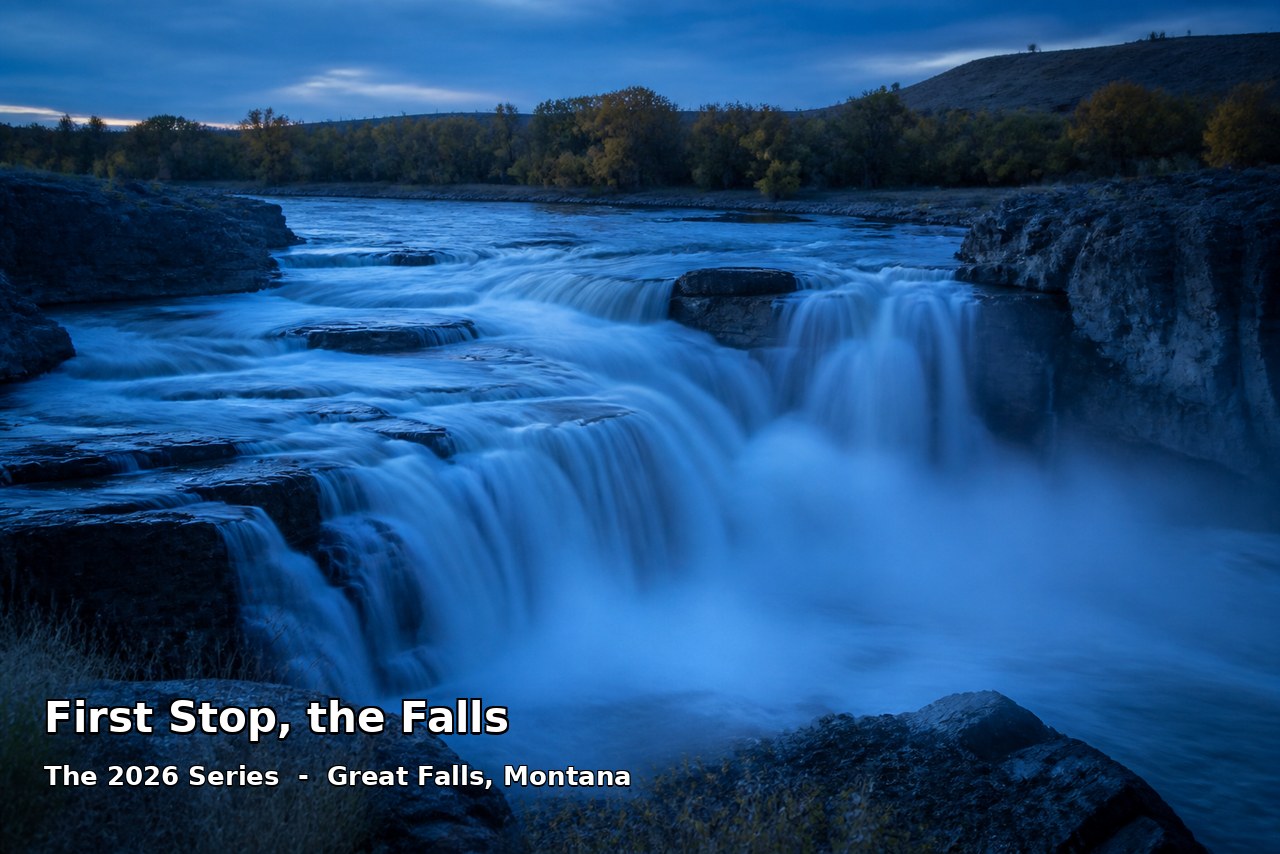
First Stop, the Falls: The Great Falls Visitor Center and the Missouri River Tour
The Smartest Stop on Any Trip
Every long trip has a moment where you either skip the visitor center and figure it out the hard way, or you stop. We stopped. The Great Falls Visitor Center - home of Great Falls Montana Tourism at 15 Overlook Drive - was our first stop in town, before the museums, before the falls, before anything. Rack after rack of brochures, maps you can spread out on the counter, and locals who can tell you in five minutes what you should do with the two days you have. That conversation rerouted our whole itinerary: it's what put Fort Benton on the map for us a few days later, and it shaped what we did that very afternoon.
Because here's the thing about Great Falls: the town is named for the river, and the river is worth the drive. The friendly folks at the visitor center will tell you exactly how to see it. We followed the Missouri.
A River That Falls 612 Feet
Most rivers meander. The Missouri here throws itself off a cliff. Five times. Over a ten-mile stretch, the river drops 612 feet - a combined 187 feet of vertical waterfall plus 425 feet of steep, churning riverbed. From upstream to downstream, the falls are Black Eagle Falls, Colter Falls, Rainbow Falls, Crooked Falls, and the big one: the 87-foot Great Falls, the largest single waterfall on the entire Missouri River.
The first people to see them arrived thousands of years ago. The Mandan knew of the cataracts and called them, simply, "the great falls." The Blackfeet had a formal name for Rainbow Falls: Napa's Snarling - one of the great place-names on the northern plains, and accurate to this day. There was never a reason for anyone to linger here permanently - the gorge is too fierce for boats - but every traveling nation knew this stretch of river.
Then came June 13, 1805. Meriwether Lewis rounded a bend on foot and heard the roar before he saw it. What he found stopped him cold: he called it "the grandest sight I ever beheld" in his journal - the largest waterfall he'd ever seen, on a river he'd followed for two thousand miles. And then came the hard part. The expedition couldn't run the falls, so they portaged everything around them - nearly a month of hauling canoes and supplies overland in brutal heat, through thunderstorms and a hailstorm that nearly cost them everything. It was the single hardest stretch of the entire Lewis and Clark expedition.
The River Tour: What We Did
Armed with the visitor center's advice, we set out on the river circuit - the self-guided tour that strings together the falls, the dams, and the viewpoints along the Missouri. This is a drive-and-stroll tour, not a hike: park at an overlook, walk to the edge, stand in the spray, repeat. It's the kind of afternoon where you take a hundred photos and know that none of them will do it justice.
Black Eagle Falls. The first and gentlest of the five, a 26-foot ribbon of water you can stand directly above. Black Eagle Memorial Island, reached by a bridge, puts you right over the falls - named for the black eagle that nested in a cottonwood on the island in Lewis's time. Below it sits Black Eagle Dam, the first of the hydroelectric dams built here, powering the smelters and industry that built the town.
Rainbow Falls. Clark mapped it as "Beautiful Cascade," and the 1872 engineer who renamed it wasn't wrong. It's the photogenic one - a 44-foot drop framed by black rock. These days it's often gentle, its flow diverted through Rainbow Dam, but when the water runs it earns its name.
Crooked Falls. The loner - the one fall no dam touches, still curving sideways through the canyon the way it did when the Blackfeet called the river country home.
The Great Falls at Ryan Dam. The headliner. Ryan Dam was built right at the Great Falls in 1915, and today a swaying suspension bridge carries you out to Ryan Island Park, where the 87-foot drop roars on the one side and the Missouri moves on to its next act on the other. Lewis's "grandest sight" is best viewed - as it turns out - from a small island in the middle of it. Hold the rail. Feel the ground hum.
If you keep going, the river hands you two more gifts: Giant Springs State Park, home to one of the largest freshwater springs in the world, and the Roe River, which at 201 feet claims the title of the shortest river on Earth. Yes, you can stand at both ends of a river in under a minute.
Why the Falls Made the City
It's worth understanding what you're looking at. Paris Gibson founded Great Falls in 1883 with a specific vision: the falls were the most concentrated hydropower on the northern plains, and he intended the city to be the "Minneapolis of the West." The dams came fast - Black Eagle first, then Rainbow, Cochrane, Ryan, and Morony - and with them the smelters, refineries, and railroads. The waterfalls that made the town also got harnessed by it, which is why the river tour is really two tours in one: a tour of the wildest water on the Missouri, and a tour of the industry that grew up in its shadow. The Great Falls are on the Montana state seal, right where the territorial seal put them in 1865.
If You Go
Start at the Great Falls Montana Visitor Center, 15 Overlook Drive (406-761-4436) - free, friendly, and loaded with maps. Tell them what you like and how long you have; then follow the Missouri on the river circuit described above. Pair it with the Lewis and Clark National Historic Trail Interpretive Center, which sits on a bluff above the river and tells the portage story better than anyone - we did it the same day, and the two pair perfectly. Budget a half day for the falls tour alone, more if you walk any of the 50-plus miles of River's Edge Trail that connect the overlooks.
The honest fine print: the dams tame the falls, and in late summer the river runs low. Some falls are reduced to a trickle at certain times of day and in certain seasons - but the plumbing of the whole river, the bridges to the islands, the hum of the generators, and the story of the city they built is its own kind of spectacle. Go for the water; stay for the story.
For RVers, Great Falls RV Park makes a comfortable base, and the river tour is entirely big-rig-friendly: every overlook has parking, and nothing on the circuit requires unhitching. Bring sunscreen - the prairie sun on the water will get you - and if you have a mirror camera or a drone, this is the town for it.
Last Light
We finished the day where the river ended its fall - standing on the island at Ryan Dam with the water doing what it has done for ten thousand years, and listening to it the way Lewis must have. Two hundred years ago, this was the most feared ten miles of the Missouri, a month of misery for thirty-one exhausted explorers. Today you cross a bridge and watch it fall. The river never stopped being great. We just built around it.