The Chateau de Mores: A Marquis on the Prairie
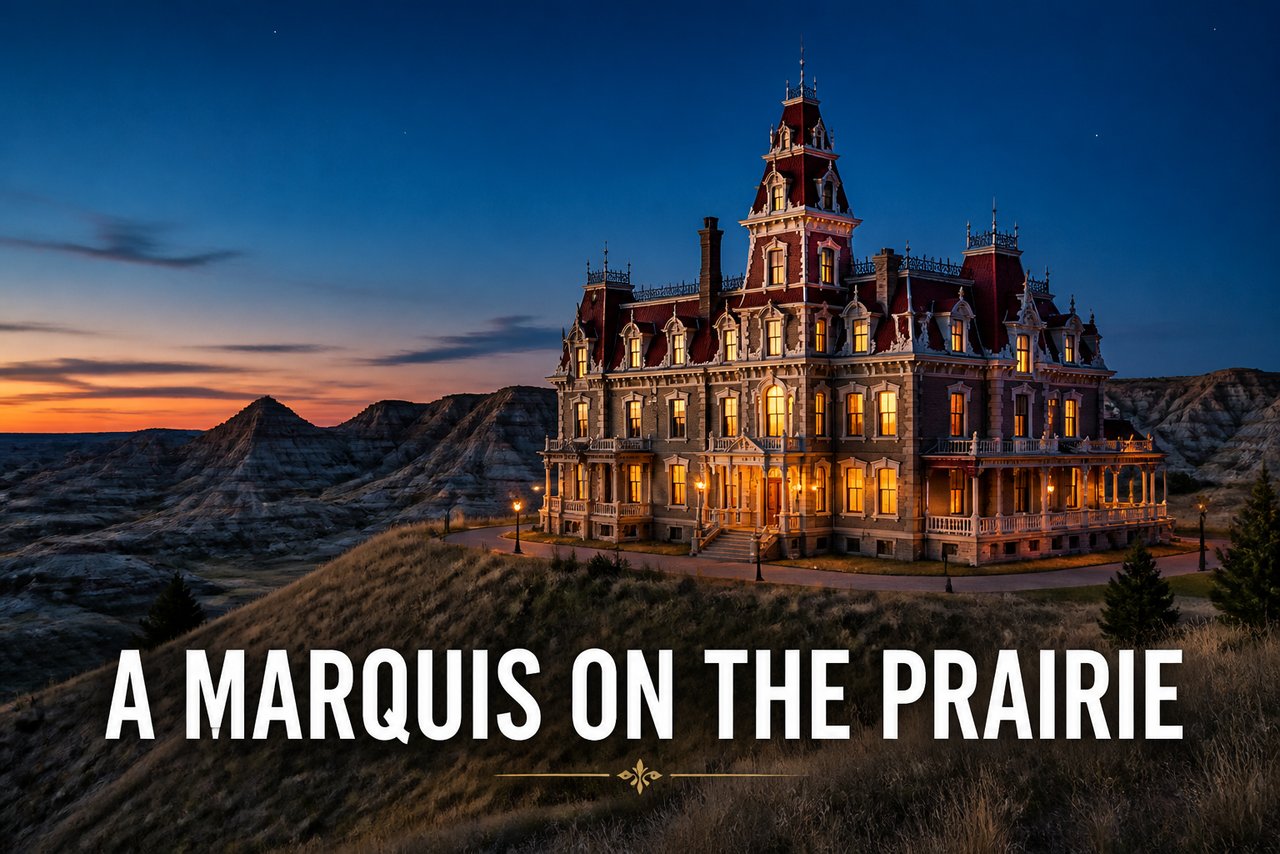
From the town of Medora you can see it up on the hill: a 26-room, two-story Victorian chateau with steep red roofs and a broad veranda, standing on the Dakota prairie like it took a wrong turn out of the Loire Valley. The Chateau de Mores was built in 1883 as the summer home of Antoine, the Marquis de Mores, and his wife Medora - and the tour through its rooms is one of the strangest, richest history lessons in North Dakota.
The Empire That Didn't Last
The Marquis arrived in the Badlands at 24 with a plan to beat the big Chicago packers at their own game: slaughter range cattle on the prairie and ship the dressed meat east in his own refrigerated rail cars - the Northern Pacific Refrigerator Car Company - rather than shipping live animals to slaughter. He built a meatpacking plant by the river, founded the town below, recruited ranchers to his scheme, and for a moment the Badlands beef industry looked like the future. It collapsed within a decade - the plant failed, the debts mounted, and the Marquis left for adventures in Southeast Asia and Africa that ended in 1896, at 37, killed in the Sahara. The chateau stayed in family hands until 1956, when it came to the state as a historic site.
The Tour
State Historical Society guides walk you through the original furnishings - the family used it seasonally, and much of what is inside came from France with them: the hunting lodge scale of the ground-floor rooms, the bedrooms upstairs, the staff quarters, the view off the porch down the valley. The visitor center at the hill's base sets up the whole story, and a walking trail connects town, plant site, and chateau. Check summer tour times; the house is viewed by guided tour only.
Our Take
We toured on a hot mid-July afternoon as part of our Medora days, and the house rewards the slow visitor: every room is a window into how much money arrived here, how fast it left, and how much of the West's story is written by people who lost. The man himself is remembered in town with a statue and a name on half the businesses. The empire is gone. The house, on its hill with the river below, is still keeping the story.