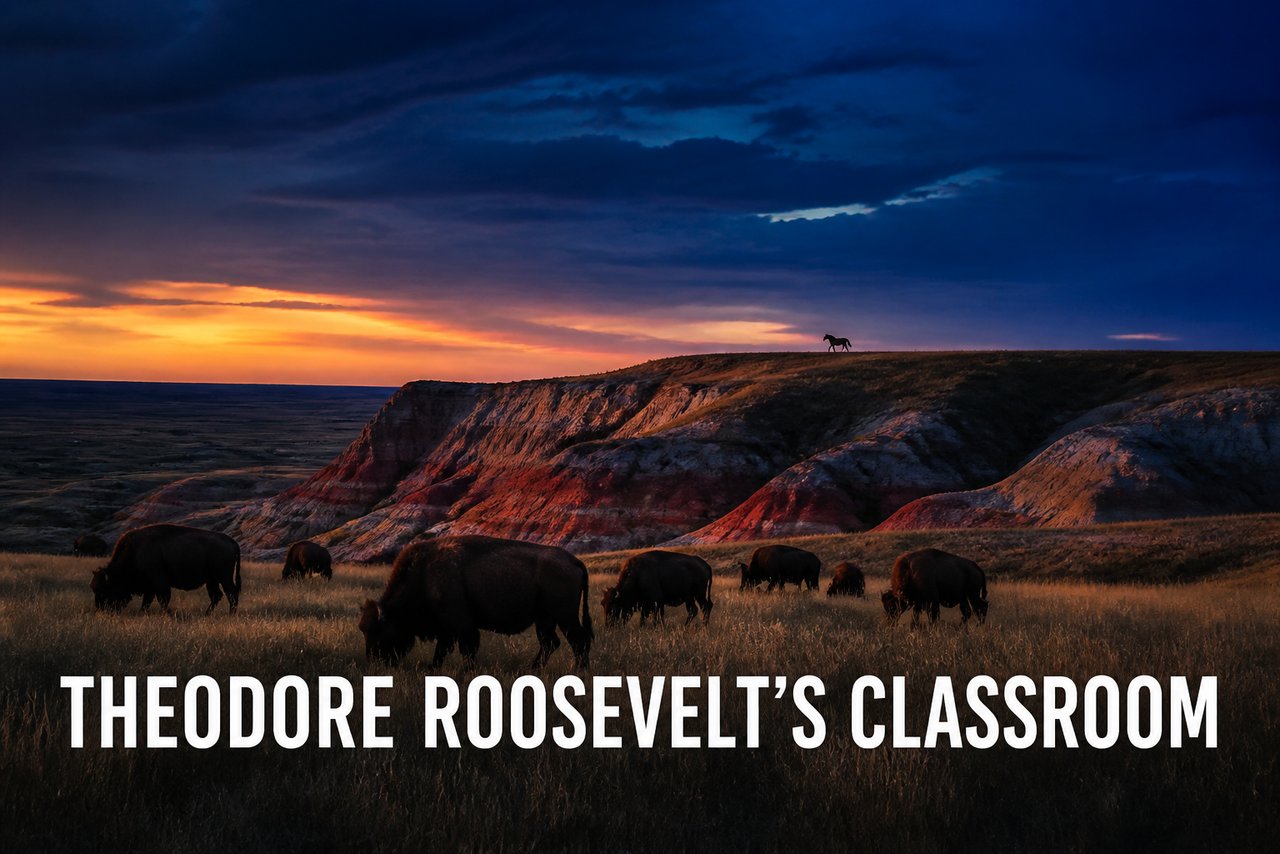
Theodore Roosevelt's Classroom: The South Unit Loop
Theodore Roosevelt came to the North Dakota Badlands in 1883 to shoot a buffalo and stayed long enough to become the conservation president. The park that carries his name preserves the country that made him, and the South Unit is its greatest hits: a paved 36-mile scenic loop, bison herds in the road, wild horses on the buttes, prairie dog towns in the flats, and the Maltese Cross Cabin - the very ranch house the young New Yorker shipped out here to live in.
The Loop
Day one we did it properly: visitor center first, where Cindy collected her park stamp, then the 36-mile loop with its pullouts and interpretive signs. The wildlife does not perform - it simply lives here, unbothered: multiple bison at road's edge, mule deer in the coulees, prairie dog towns whistling, pronghorn, and the feral horses that have run these hills since the Spanish came north. The rock is the other star - red, tan, and striped badlands carved by the Little Missouri River's patient flood plain work, the Painted Canyon Overlook on I-94 Exit 32 delivering the postcard before you even enter the park.
Day two we came back at 6:30 in the morning, because a ranger-friend's advice had paid off before: bull bison in the early light, the main herd spread across the flats, deer, antelope, wild horses, and the Maltese Cross Cabin - Roosevelt's restored first ranch house, moved to the visitor center grounds - before the crowds arrived. We watched the park film on TR's history and impact on the national parks, and it ties the whole place together: this landscape, in the worst years of his life, is where the future president rebuilt himself.
The Practical Side
One piece of hard-won wisdom: we had reserved Cottonwood Campground, the park's loop along the Little Missouri with some electric sites, but we checked it in person and confirmed our instinct - it would have been extremely tight for our fifth wheel, and July's 100-degree days sealed the decision. We used Buffalo Gap Ranch two miles outside the gate instead and consider it a trade up. The Scenic Loop itself is paved and roomy by national-park standards, though some sections curve narrow; give it an unhurried hour and a half, more if the bison are commuting.
Why It Matters
Roosevelt ranched here from 1883 to 1887, through personal tragedy and brutal winters, and later said he would never have become president without the lessons of these Badlands. The park was established in 1947 and protects both his ranching country and the wildlife he loved. Drive the loop at dawn and you will understand what the Badlands taught him: the country shapes the person, given enough space.