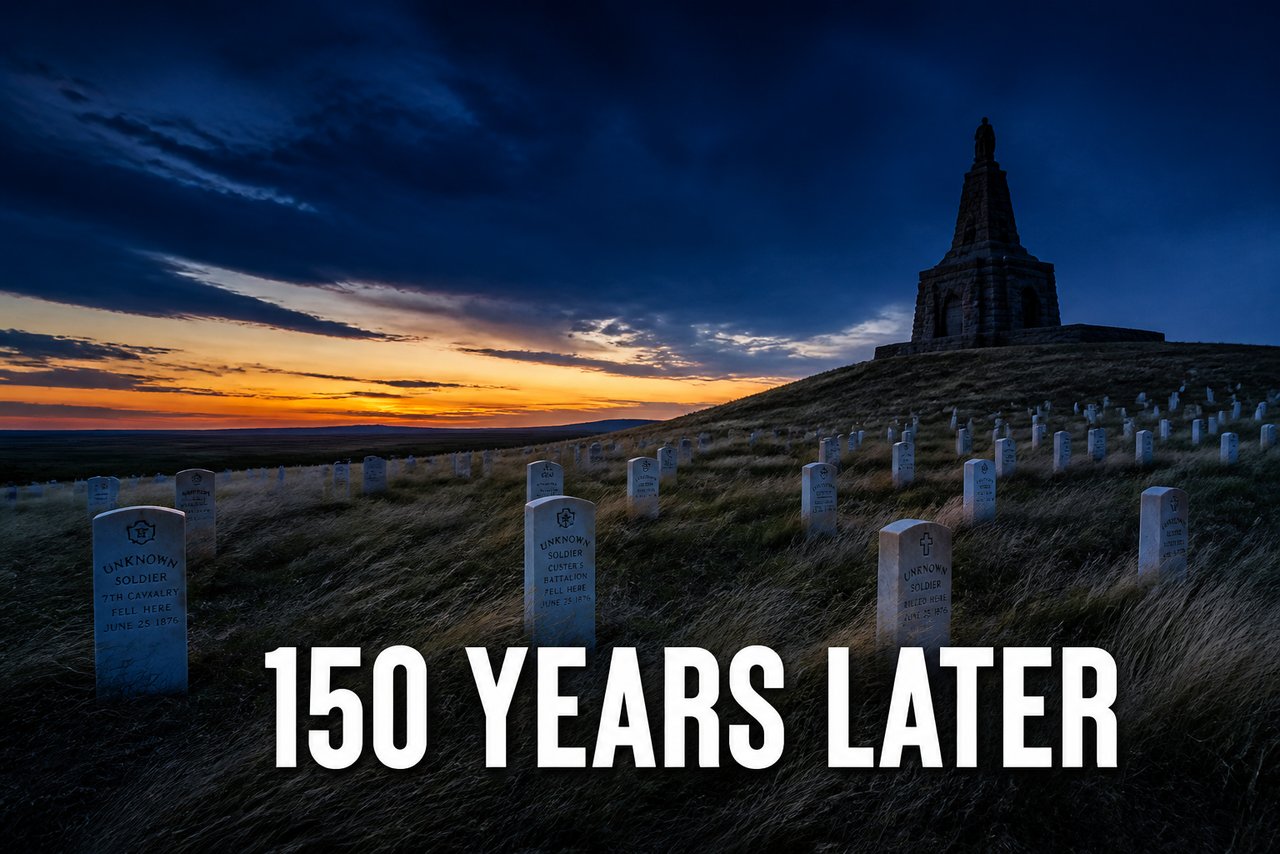
Little Bighorn, 150 Years Later: A Battlefield Seen Twice
I first visited Little Bighorn the summer before sixth grade. I remembered the white markers, the hill, and the hush. Returning in July 2026 - fifty years later, practically to the season - I found that the hush was the same, and almost everything I understood about the place had changed. That is what a great historic site does: it meets you at the age you are now. And this year there was an added weight in the air, because 2026 marks the 150th anniversary of the battle.
What Happened Here
On June 25-26, 1876, on the grassy bluffs above the Little Bighorn River in southeastern Montana, the 7th Cavalry under Lt. Col. George Armstrong Custer attacked a village of thousands - Lakota, Northern Cheyenne, and Arapaho, led in council by Sitting Bull and in the field by war leaders including Crazy Horse. Custer divided his regiment, underestimated the size and resolve of the encampment, and charged. The result was a catastrophe for the Army: Custer and more than 260 of his men were killed in a battle the Lakota and Cheyenne remember as the Battle of the Greasy Grass. It was, as I wrote in my own notes that evening, a last stand by the Indians - and they whipped the military but good. It remains the great victory of the Plains Indian wars, and the beginning of the end of the way of life it defended: within a year, most of the surviving bands were on reservations.
Walking the Ground
The monument sits within the Crow Indian Reservation near the town of Crow Agency, and the wind out here does the narration. Last Stand Hill is the focal point - marble headstones scattered across the slope, each marking the spot where a soldier fell. The 7th Cavalry Memorial stands where Custer's body was found. And near it, looking out over the river bottom where the great village stood, is the Indian Memorial, dedicated in 2003 - a circular earth-and-stone structure that finally tells the other side of the story in the words of the tribes themselves. The revision is long overdue and beautifully done: the site was called Custer Battlefield National Monument until 1991, when it was renamed to honor the battle, not the general.
Drive the 4.5-mile tour road out to the Reno-Benteen Defense Site, where the rest of the regiment held out through the second day. Read the markers - including the red granite markers placed in recent decades where Cheyenne and Lakota warriors fell. Wander the Custer National Cemetery, where soldiers from every American war lie buried together. Give it two or three hours at least, more if you can.
The 150th
We were there a few weeks after the June 2026 commemorations, when representatives of the Lakota, Northern Cheyenne, and Arapaho nations gathered at the battlefield to mark 150 years. At the Crow Trading Post we ate Indian Tacos for lunch - do not leave without one - and picked up souvenirs celebrating the 150th. The whole visit felt different from the one I remember as a kid, and better: more honest, more complete, more solemn.
There is a lot more to this place than a younger me had held onto. If you saw it long ago, go back. The ground has more to say now.